UV-coated polycarbonate panels offer lightweight, durable, and highly transparent options for greenhouses, roofs, and various DIY structures. This guide highlights five top picks, comparing their construction, UV protection, and installation features to help you choose the right panels for your climate and project needs.
| Product | Brand | Panel Size | Thickness | Notes |
|---|---|---|---|---|
| UMIG 12 PCS 4′ x 2′ x 0.16” Panels | UMIG | 4′ x 2′ (120 cm x 60 cm) each | 0.16″ (4 mm) | Double-layer, UV-coated, easy to cut |
| Polycarbonate Clear Sheet 16″ x 96″ | Beeveer | 16″ x 96″ | 1/20″ (≈0.05″) | UV-coated, versatile DIY sheet |
| Sinimaka 8 Pack 8′ x 4′ x 0.24” | Sinimaka | 8′ x 4′ | 0.24″ | Twin-wall, high temp range |
| Quibbay 8PCS 6′ x 4′ x 0.16” | Quibbay | 6′ x 4′ | 0.16″ | Double-wall, UV protected |
| Pangda 8 Pcs 4′ x 2′ x 0.2” | Pangda | 4′ x 2′ | 0.2″ | UV-coated, reinforced twin-wall |
These selections provide a range of sizes, thicknesses, and designs—from lightweight single-layer to robust triple-layer honeycomb configurations—so readers can match performance with project scope and local weather conditions.
UMIG 12 PCS Polycarbonate Panels

UMIG panels combine upgraded double-layer construction with UV coating on both sides, delivering enhanced insulation for greenhouse environments. The panels measure 4 ft by 2 ft with a 0.16 inch thickness, allowing straightforward cutting to fit customized roof or wall sections. The lightweight design supports quick installation while maintaining impact resistance, reducing heat buildup in summer and helping retain warmth in winter. Their twin-wall structure helps diffuse sunlight and improve plant-friendly light distribution without excessive glare.
Key features include:
- Double-layer polycarbonate for improved thermal insulation
- UV protection on both sides
- Lightweight and easy to cut with a utility knife
- Impact-resistant, yet transparent for meaningful light transmission
Beeveer Clear Polycarbonate Sheet

Beeveer offers a clear polycarbonate sheet sized at 16″ by 96″ with a thin profile suitable for crafts, window restorations, and light-duty glazing. The sheet comes with UV coating on both sides to help resist yellowing and preserve optical clarity. It’s noted for versatility, packing easily with standard tools like scissors or a hacksaw, and it can be drilled, bent, or thermoformed with heat, making it a flexible option for DIY enthusiasts and hobby projects.
Highlights include:
- UV-coated, double-sided protection
- Good balance of clarity and toughness
- Easy cutting and thermoforming for customized projects
- Suitable for various households and workshops
Sinimaka Twin-Wall Panels

Sinimaka’s eight-panel bundle features 8′ x 4′ sheets with a 0.24 inch thickness and a twin-wall design. The panels are designed for extreme weather, capable of withstanding temperatures from -40°C to 120°C, and provide solid insulation to stabilize greenhouse conditions. The high transparency combined with UV coating blocks most UV radiation while maintaining strong light transmission, supporting consistent plant growth and year-round use in varied climates.
Notable aspects:
- Twin-wall construction for durability
- Wide temperature tolerance for all-season use
- High light transmission with UV protection
Quibbay 8PCS Polycarbonate Panels (6′ x 4′ x 0.16”)
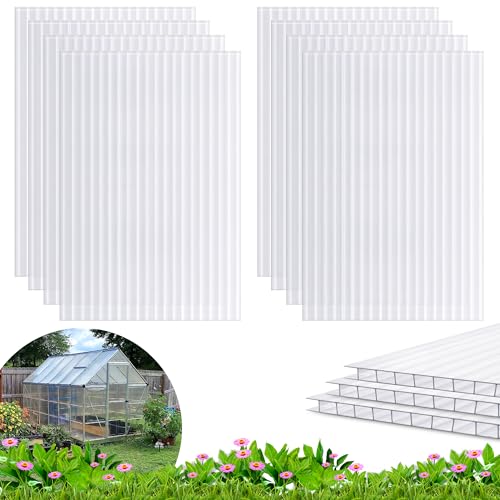
Quibbay’s 8-piece set features a 0.16 inch thick, twin-wall design, providing good insulation and UV protection. The panels allow a favorable balance of light transmission and shade diffusion—supporting photosynthesis while protecting plants from harsh direct sun. They are designed to be weather-resistant and resilient under wind, rain, and snow, helping extend growing seasons in challenging climates.
Main features include:
- Double-wall, UV-protected design
- Good light diffusion with high transparency
- Strong weather resistance for greenhouse use
Pangda 8 Pcs 4′ x 2′ Panels

Pangda’s eight-panel kit provides UV-coated, 0.2 inch thick twin-wall panels designed for robust greenhouse coverage. The coatings help shield plants from harmful UV while maintaining a warm interior environment. The panels are designed to be cut to fit various shapes and can be installed in a straightforward manner with standard tools. The mirrored clarity and structural integrity aid in maintaining a bright, productive greenhouse space.
Key attributes:
- UV-coated twin-wall design
- Relatively thick 0.2″ panels for added durability
- Cuttable to fit irregular layouts
Buying Guide: Key Purchase Considerations
- Panel thickness and structure: Twin-wall and triple-layer honeycomb designs offer superior insulation and impact resistance, which helps reduce heating costs and protect plants during storms. Choose thickness based on climate and wind exposure.
- UV protection: Look for UV coatings on both sides to prevent yellowing and ensure long-term clarity. This is essential for maintaining light transmission and protecting interior plants.
- Light transmission and diffusion: Some panels prioritize high light transmission, while others diffuse light to reduce glare. Consider your crop needs and whether you prefer direct or diffused sunlight.
- Size and cutting: Panels come in a range of sizes. Ensure your sheets can be cut easily to fit your structure without compromising integrity. Keep a utility knife or saw suitable for plastic as a requirement.
- Weather tolerance: For outdoor structures in extreme climates, select panels rated for wide temperature ranges and strong weather events like hail, snow, or heavy rain.
- Installation and weight: Lighter panels simplify handling and mounting, but heavier panels may offer greater rigidity. Plan for mounting hardware and support rails compatible with polycarbonate.
- Durability and lifespan: UV stability, impact resistance, and resistance to cracking are key for longevity, especially in high-wind or hail-prone areas.
- Cost and availability: Compare bundle sizes, replacement part availability, and regional shipping constraints to minimize total project cost over time.
In selecting UV-coated polycarbonate panels, balance the need for light transmission, insulation, and durability with the specific climatic challenges of your location. The options outlined above span compact DIY projects to larger greenhouse installations, offering flexibility to meet different gardening goals while maintaining clarity and resilience.