Self-adhesive hinging tape is a trusted solution for conserving and mounting prints, photos, and documents. When choosing a tape, look for archival-grade materials, acid-free adhesives, and fabrics that minimize yellowing over time. The products below are popular options in American framing shops and home studios, offering varying lengths, fabrics, and pH levels. This guide highlights five well-regarded self-adhesive linen and abaca tapes to help you compare strengths, applications, and long-term performance.
| Product | Brand | Material | Length | Notes |
|---|---|---|---|---|
| Lineco Self-Adhesive Linen Hinging Tape, 1.25″ x 35′ (White) | Lineco | Linen | 35 ft | Acid-free, neutral pH |
| TSSART Linen Hinging Tape, 1.25″ x 35 ft | TSSART | Linen | 35 ft | Acid-free, fabric-weave |
| Lineco Self-Adhesive Linen Hinging Tape, 1.25″ x 150 ft | Lineco | Linen | 150 ft | Neutral pH, acid-free |
| Lineco Archival Self-Adhesive Mounting Hinging Tissue, 1″ x 35 ft | Lineco | Paper Tissue | 35 ft | Lightweight, archival |
| Lineco Self-Stick Linen Hinging Tape, 1.25″ x 35′ (Pack of 2) | Lineco | Linen | 70 ft (2 x 35′) | Non-yellowing, acid-free |
Lineco Self-Adhesive Linen Hinging Tape, 1.25″ x 35′ — Neutral pH

The Lineco 1.25-inch linen hinging tape provides an acid-free, neutral pH adhesive designed for hinging paper artwork in frames. The linen fabric offers flexibility for lightweight to moderately heavy pieces. This tape is self-adhesive, simplifying mounting while aiming to minimize long-term yellowing. It is commonly used to hinge prints, posters, and other flat artworks to mats or backboards. Consider compatibility with your chosen mounting method and the weight of the piece when selecting this option.
TSSART Linen Hinging Tape — 1.25″ x 35 ft
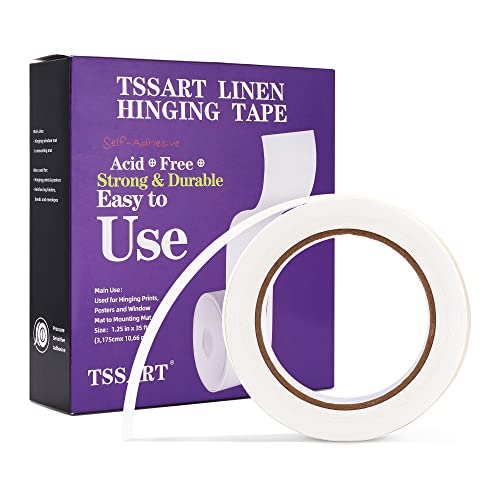
The TSSART linen hinging tape emphasizes durability with a fabric-weave construction that’s bendable and strong. It is designed for quick, precise mounting, including hinges for prints and posters, as well as bindings for books and other craft projects. The removable plastic backing makes measurement and cutting easier, and the acid-free, archival-quality composition supports long-term conservation of sensitive materials. This option suits projects requiring a reliable hinge without sacrificing flexibility.
Lineco Self-Adhesive Linen Hinging Tape — 1.25″ x 150 ft

This Lineco option offers a generous length, ideal for studios handling multiple pieces or larger projects. It uses a non-yellowing, neutral pH acrylic adhesive designed for archival mounting, framing, and conservation work. The tape adheres to paper artworks and mats while remaining removable with mineral spirits when needed. It is suited for professionals who require long rolls to cover extensive framing tasks without frequent reorders.
Lineco Archival Self-Adhesive Mounting Hinging Tissue — 1″ x 35 ft

Lineco’s hinging tissue is a lightweight option designed for fragile or translucent artworks. Made for archival use, it supports heavyweight mounting while minimizing the risk of seen adhesive seams. The tissue is designed to be non-yellowing, preserving transparency over time. This is a suitable choice for conservators seeking minimal material footprint with reliable archival properties for delicate pieces.
Lineco Self-Stick Linen Hinging Tape — 1.25″ x 35′ (Pack of 2)

The dual-pack offering ensures a steady supply for studios that hinge many pieces. Like other Lineco products, this tape emphasizes archival quality with a non-yellowing, neutral pH acrylic adhesive. It is suitable for hinging mats to backboards, mounting large or heavy artworks, and even applications in book repair. The pack provides cost efficiency for high-volume framing workflows while maintaining archival standards.
Buying Guide: Key Considerations For Self-Adhesive Hinging Tape
Choosing the right hinging tape depends on the artwork type, desired permanence, and working conditions. Here are practical considerations to help you compare options.
- Material and archival quality: Linen and abaca tapes are favored for their strength and compatibility with paper-based art. Look for acid-free, neutral pH formulations to minimize chemical interactions over time.
- Adhesive behavior: Self-adhesive tapes simplify mounting but require careful placement. Ensure the adhesive remains stable under humidity and temperature variations typical in galleries or storage.
- Length and roll size: Longer rolls reduce reordering and interruptions in workflow. For high-volume framing, bundles or packs offer economic efficiency.
- Weight handling: Lighter pieces benefit from standard linen tapes; heavier or larger works may need wider tape or alternative hinges to avoid sagging or edge lift.
- Removability and restoration: Some tapes are designed to be removable with mineral spirits, facilitating non-destructive future restoration. Consider whether you might need to remove hinges in the future.
- Compatibility with substrates: Check that the tape adheres well to the back of mats, backboards, and the artwork’s surface without causing staining or wave.
- Longevity and yellowing: Non-yellowing formulations ensure that the look of the artwork remains stable. This is especially important for long-term conservation projects.
- Usage scenario: For archival framing, prefer acid-free linen or abaca tapes. For lighter craft tasks, hinging tissue can minimize material visibility while maintaining flexibility.
Compared to other mounting methods, self-adhesive hinging tape offers a balance of ease-of-use and archival integrity. Researchers and conservators often prefer linen or abaca tapes for their fiber flexibility and durability. When selecting a product, verify the adhesive’s pH level, the fabric’s resilience, and the intended removal approach. Testing a small area before full application can help ensure compatibility with the artwork and matting system.
Environmental conditions in storage and display should inform your choice. Tapes with neutral pH and non-yellowing properties tend to perform better across a range of humidity and light exposure. If you expect frequent handling or migration between frames, consider a tape with a removable adhesive and a back-up plan for later conservation assessment.