Upgrade your outdoor space with decorative air conditioner screens that blend privacy, airflow, and style. This guide highlights five top options, detailing materials, design features, and how each option improves ventilation while concealing unsightly units. Learn what to look for in a durable, weather-ready screen that complements your landscape and meets local conditions.
| Product | Brand |
|---|---|
| Air Conditioner Privacy Screen, Retro Wood AC Fence | Eapmic |
| 3-Panel Outdoor Air Conditioner Fence Screen | Mederlo |
| GDLF Air Conditioner Fence Outdoor Wood Privacy Screen | GDLF |
| CASTLECREEK Air Conditioner Fence Screen | CASTLECREEK |
| FOOWIN Air Conditioner Fence, 3 Panels | FOOWIN |
Air Conditioner Privacy Screen by Eapmic

The Eapmic model uses carbonized wood for strength and environmental friendliness, delivering a sturdy, durable screen ideal for outdoor use. Its design prioritizes protection for the air conditioner unit while maintaining good ventilation so heat dissipation remains effective. The mortise-and-tenon construction with strong nails ensures stability, even in adverse weather, and the shutter-like fence reduces direct exposure to wind, rain, and sun. This combination supports a longer service life for the unit.
3-Panel Outdoor Air Conditioner Fence Screen (Mederlo)

Mederlo offers a three-panel outdoor privacy screen with dimensions of 32″ W x 38″ H. The arrangement can form various configurations (square, U-shape, straight line) to fit different spaces and privacy needs. Its slat spacing supports optimized airflow, promoting ventilation around the air conditioner and reducing the risk of overheating, thereby potentially extending the unit’s lifespan. Constructed from premium solid wood, this screen emphasizes natural appearance and enduring durability.
GDLF Air Conditioner Fence Outdoor Wood Privacy Screen

GDLF’s two-panel setup includes a planter box and no-ground-stake design, adding stability through weight. The unit is designed for versatile use, concealing air conditioner enclosures, trash cans, pool equipment, and even as a garden fence. Its natural wood material provides visual appeal and durability, while the slatted design supports efficient air flow around the AC unit, helping to prevent overheating and extend equipment life.
CASTLECREEK Air Conditioner Fence Screen

The CASTLECREEK AC screen offers a classic concealing solution using solid fir wood that can be painted or stained for a personalized touch. Its lattice design allows adequate air passage to prevent overheating while maintaining a visually appealing exterior. This option blends traditional wood aesthetics with functional privacy for outdoor units.
FOOWIN Air Conditioner Fence With Planter Box
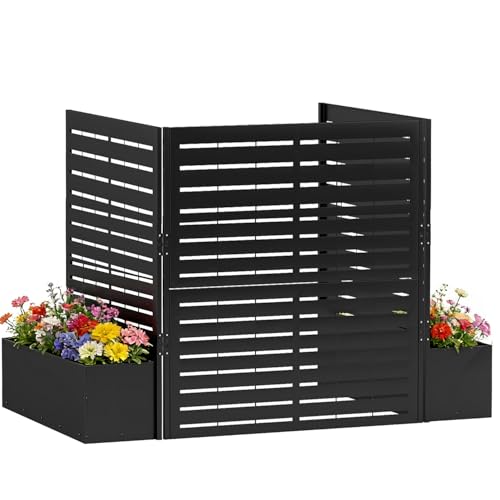
FOOWIN presents a metal privacy screen with three panels and a planter box, delivering a modern outdoor look. The design uses a horizontal slat grille to promote strong airflow around the air conditioner, while the planter boxes add a decorative and functional element. No ground pegs are required for stability since the planter boxes leverage the unit’s weight, helping protect concrete surfaces and providing an anchored appearance.
Buying Guide: Key Purchase Considerations For Decorative AC Screens
When selecting an outdoor air conditioner screen, consider material, ventilation, stability, and maintenance. Different climates may demand varying wood types, metal options, or moisture resistance. Look for screens that offer sufficient airflow to prevent overheating while concealing the unit’s appearance. Stability features such as planter boxes, weighted bases, or no-dig designs help protect against wind and weather. Optional planter elements can support plants for additional privacy and aesthetics, but ensure they include drainage to prevent water buildup. Finally, assess compatibility with your unit’s dimensions and access needs for maintenance.
Material And Durability
Wood screens (solid or engineered) provide a natural aesthetic that blends with landscaping, while metal designs offer a modern look and often greater weather resistance. Carbonized or treated woods improve longevity in outdoor conditions. Consider finishes (stain or paint) to match your home exterior and protect against moisture, UV exposure, and pests.
Ventilation And Heat Dissipation
Choose screens with slats or perforations that enable unobstructed air flow. Excessive blockage can raise temperatures around the condenser, reducing efficiency and potentially shortening equipment life. Slat spacing, lattice patterns, and open-air designs are key features to evaluate.
Stability And Installation
No-dig or planter-box designs distribute weight to stabilize screens without invasive installation. Ground stakes and anchored bases provide wind resistance but may require more setup. Ensure the chosen screen fits your unit’s footprint and allows for maintenance space and panel access.
Maintenance And Aesthetics
Consider how easy it is to clean and weather-proof the screen. Wood may require periodic sealing; metal screens might need rust prevention. Aesthetics should align with your outdoor decor, offering a pleasing foreground while keeping the essential privacy function intact.
Privacy Levels And Flexibility
Some screens offer adjustable configurations or multiple panels to tailor privacy. If you plan to plant climbers or add planters, ensure drainage and space for growth. Multi-panel designs can adapt to odd-shaped spaces while preserving airflow.
Common Comparisons
- Wood vs. metal: Wood provides natural warmth; metal delivers modern durability and potential cleaner lines.
- Planter boxes: Enhances aesthetics and stability; ensure adequate drainage and access for maintenance.
- No-dig vs. stake-based: No-dig is simpler for renters and less invasive, while stakes may offer robust wind resistance in exposed areas.
- Ventilation emphasis: Prioritize designs with visible gaps and slat spacing to avoid overheating.