If you’re looking to color concrete floors, patios, or countertops with a durable, marbled finish, acid stains can offer a unique, naturally variegated look. This guide highlights five reliable products that work well on cured cement and concrete surfaces, helping you evaluate options by design, application ease, and lasting color. The selections balance classic acid-stain chemistry with modern water-based and semi-transparent alternatives for varied budgets and project scopes.
Product Overview
| Product | Brand | Key Benefit |
|---|---|---|
| BEEST Burnt Ember Acid Stain | BEEST | Permanent marbled finish, deep penetration |
| BEEST Burnt Ember Test 8 oz | BEEST | Small-area testing to preview results |
| Concrete Resurrection Onyx Stain Concentrate | Concrete Resurrection | Water-borne, easy to layer for mottling |
| Concrete Stain Concentrate Charcoal | Concrete Resurrection | Semi-transparent, professional-grade color |
| Water-Based Walttools Black Stain | Walttools | Low-VOC, adjustable color depth |
These products span traditional acid stains and safer, modern alternatives. They’re suitable for floors, pavers, patios, countertops, and other cement surfaces where a durable, variegated color is desired. Each option emphasizes color depth, longevity, and ease of application to support both DIY and professional projects.
BEEST Burnt Ember Acid Stain

BEEST Acid Stains are designed for cured concrete, delivering a durable marbled finish as the acid reacts with the concrete’s mineral composition. This process yields a one-of-a-kind color and pattern, with the option to choose from Burnt Ember, Dark Shadow, or Slate. The product is noted for long-lasting color resistance to fading and wear, making it suitable for outdoor patios, driveways, and interior floors. Application tends to be straightforward for both DIYers and professionals, with a focus on creating unique, natural-looking results rather than uniform coloration.
BEEST Burnt Ember Test 8 Oz

This smaller-size option allows a quick preview on a discreet area before committing to a full project. It shares the same color family and marbled potential as the larger BEEST stain, enabling you to assess how the acid treatment will interact with your concrete’s mineral content. Testing helps predict the final look and reduces surprises when applying a full gallon or more, especially on large surfaces or areas with varied porosity.
Concrete Resurrection Onyx Stain Concentrate

Concrete Resurrection’s stain concentrate provides a water-borne, semi-transparent option designed for versatility. It’s suitable for floors, pool decks, patios, and driveways, and supports layering with additional colors to create marbling and depth. The product emphasizes easy mixing and application, with potential for varied patterns depending on layering and dilution. It’s a practical choice for contractors seeking predictable control over depth and translucency in a contemporary stain approach.
Concrete Stain Concentrate Charcoal 8 Oz

The Charcoal concentrate is a semi-transparent option from Concrete Resurrection intended for professional-grade results. It’s designed to produce a natural-looking, variegated finish that emphasizes the concrete’s inherent textures rather than a flat color. This product suits both interior and exterior installations where a durable, sophisticated tone is desired. The stain supports careful layering to achieve richer depth while maintaining the translucent, natural appearance characteristic of cement-based color work.
Water-Based Walttools Black Stain
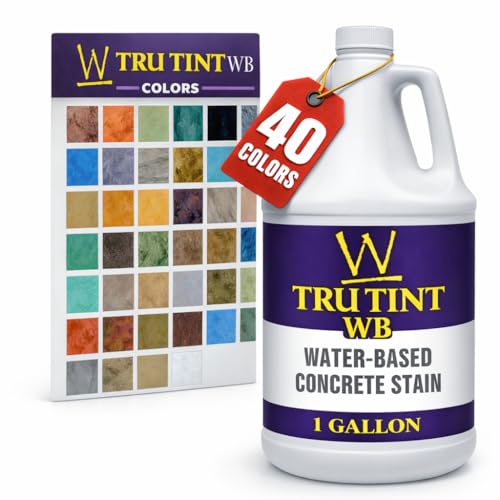
Walttools offers a water-based concrete stain with low VOC content, suitable for indoor and outdoor projects. This option provides a safer alternative to acid stains, while still offering depth and color variation through dilution and layering. The product is well-suited for projects where odor considerations, safety, and compliance with indoor air quality standards are important. It can produce a range of earthy, translucent tones that complement natural concrete textures, panache, and architectural detailing.
Becoming Informed: Buying Guide For Cement Floor Stains
Choosing the right cement stain involves balancing color goals, surface conditions, and application preferences. The following considerations help compare acids, water-based, and semi-transparent options across common project scenarios.
- Surface suitability: Acid stains work best on cured concrete with stable mineral content. If your surface has coatings, sealers, or significant porosity variation, a test area is essential to predict color distribution and adherence.
- Color depth and variation: True acid stains yield unpredictable, marbled patterns, which many homeowners value for their natural look. Water-based and semi-transparent stains offer more predictable control, allowing layering to achieve a chosen depth.
- Durability and maintenance: Long-lasting color tends to come from penetrating stains that bond with minerals. Sealing after staining protects the finish. Exterior installations often require UV-stable formulations to resist weathering.
- Application considerations: Some products are best applied with sprayers, rollers, or brushes. Test small areas first, especially on irregular textures, pitting, or newly poured concrete.
- Safety and environment: Water-based stains typically have lower VOC levels and less odor, making them suitable for indoor use or spaces with limited ventilation. Acid stains may require proper ventilation and protective gear during application and curing.
- Color planning: Consider the surrounding décor and architectural style. Warmer tones like Burnt Ember or Black Walnut can complement earthy materials, while Onyx and Charcoal provide modern, dramatic contrasts in industrial spaces.
- Maintenance routine: Regular cleaning with non-abrasive methods and periodic resealing helps preserve color integrity and gloss. Avoid harsh chemical cleaners that may strip or dull color.
Glossary of Terms
Acid stain: A chemical reaction that penetrates the concrete to create variegated, natural-looking color. Not uniform, and colors depend on the concrete’s mineral makeup.
Water-based stain: A safer alternative to acid stains, offering controllable opacity and the ability to layer colors for depth and texture.
Semi-transparent stain: A middle ground between opaque paint and transparent stain, allowing the concrete texture to show through while adding color.