Choosing the right cutting board for one-handed use often means prioritizing stability, security, and ease of cleaning. The following five adaptive boards, featuring box elder or similar hardwood construction, spikes for grip, and bread stops or pegs for secure handling, help users with limited hand mobility prepare meals safely. Each option includes non-slip bases and thoughtful design to minimize spills and maximize independence in the kitchen.
| Product | Brand | Key Feature | Amazon Link |
|---|---|---|---|
| SENDAR Adaptive One Handed Cutting Board | SENDAR | 10 food-grade spikes, raised rear fence, non-slip silicone feet | https://www.amazon.com/dp/B0D9J1JR5F?tag=byalpha0a-20 |
| PulPalet Adaptive One-Handed Cutting Board | PulPalet | One-handed use, includes bread stops, 6-blade vegetable chopper | https://www.amazon.com/dp/B0DDXSM76B?tag=byalpha0a-20 |
| EZFXHD WTER Adaptive One Handed Cutting Board | EZFXHD WTER | 10 spikes, rubber bands for long vegetables, non-slip base | https://www.amazon.com/dp/B0F2JB15P1?tag=byalpha0a-20 |
| Autonomylife Adaptive Cutting Board One Handed | Autonomylife | Central spikes, water- and stain-resistant surface | https://www.amazon.com/dp/B0FC8M9YZL?tag=byalpha0a-20 |
| JFNoraiva One-Handed Cutting Board | JFNoraiva | Spikes, peeler, bread stops for disability needs | https://www.amazon.com/dp/B0FMDDZXRT?tag=byalpha0a-20 |
SENDAR Adaptive One Handed Cutting Board

The SENDAR board pairs solid acacia hardwood with non-slip silicone feet to create a stable cutting surface that remains steady during one-handed use. It features 10 food-grade stainless steel spikes to grip foods securely, aiding one-handed chopping or peeling. A raised rear fence minimizes spills, allowing users to scoop or slide ingredients with minimal effort. The combination of stability, grip, and containment supports independence in meal prep while reducing the chance of accidents.
Ideal for stroke survivors, amputees, elderly users, or anyone needing adaptive kitchen tools, this board emphasizes safety and ease of use. Maintenance is straightforward—wipe clean and re-oil as needed to maintain the wood’s integrity. The design focuses on reducing hand strain while preserving typical cutting tasks, making it a practical choice for frequent home cooks and caregivers alike.
PulPalet Adaptive One-Handed Cutting Board

The PulPalet board is designed for one-handed operation, featuring a non-slip surface and stainless steel spikes to secure food during cutting. Included are additional adaptive tools like a one-handed vegetable peeler, bread stops, and a multi-blade vegetable chopper. This modular approach supports diverse meal prep tasks—peeling, chopping, and slicing—while maintaining stability. Quick disassembly for cleaning helps keep maintenance simple for daily use.
The integrated spikes and bands help secure long vegetables, and the overall setup aims to empower users who need assistance in the kitchen without sacrificing independence. The product line is marketed toward seniors, stroke survivors, amputees, and others who benefit from adaptive equipment that reduces risk during food preparation.
EZFXHD WTER Adaptive One Handed Cutting Board

Made from acacia wood with a sturdy, non-slip base, this board emphasizes stability for one-handed use. It includes ten stainless steel spikes to firmly hold fruits, vegetables, or bread, supported by three rubber bands to secure long-shaped items. Cleanliness is a highlight, with straightforward wiping and regular oiling recommended to preserve the surface’s durability. The design targets users who require reliable one-handed cutting solutions, combining safety, control, and ease of maintenance.
JFNoraiva One-Handed Cutting Board
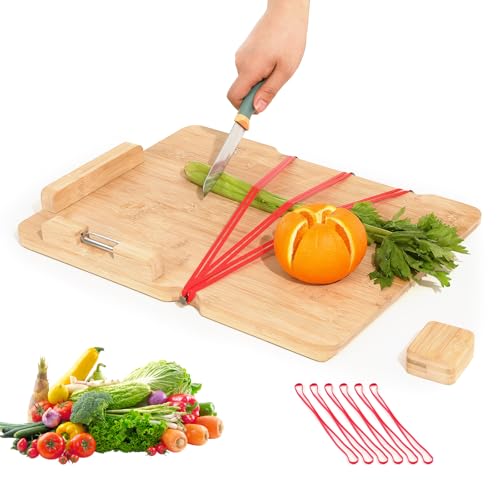
This wooden cutting board from JFNoraiva is designed for one-handed use with strategically positioned stainless steel spikes, a peeler, and a bread stopper. The combination creates a safe, efficient cooking environment for users with disabilities. Its stable bamboo construction, complemented by non-slip silicone feet, supports reliable cutting and chopping. The kit facilitates independent meal prep and accessibility, making it a practical addition to adaptive kitchen setups.
Buying Guide
- Stability and grip: Look for boards with non-slip feet, a raised fence, and spikes to prevent shifting during cutting. These features reduce the risk of slips and tool slips while using one hand.
- Security features: Bread stops and bands help secure long or oddly shaped items, increasing control for single-handed users and minimizing spillage.
- Material and maintenance: Consider hardwood options like acacia or bamboo for durability and ease of cleaning. Check whether the surface resists water and stains, and whether maintenance requires regular oiling.
- Complementary tools: Some sets include peelers, choppers, and graters designed for one-handed use. Evaluate whether these tools align with your typical cooking tasks and cleaning preferences.
- Care and safety: Ensure spikes are corrosion-resistant, and verify whether the board can be safely cleaned in a dishwasher or requires hand washing. Check for removable components that simplify cleaning.
- Versatility: If you frequently prepare varied foods, a board with multiple features (spikes, bread stops, bands) can provide broader application from slicing to peeling to grating.
- User suitability: Match the product to the user’s needs, such as stroke recovery, amputation, arthritis, or elderly mobility, and consider the board’s height, footprint, and weight for easy handling.
When selecting a box elder or similar hardwood cutting board for one-handed use, prioritize stability, secure gripping mechanisms, and ease of maintenance. The listed options cater to different preferences for tool inclusion, weight, and adaptability, enabling safer, more independent kitchen activities for users with limited hand function.