Whether you’re building STEM demonstrations, expanding a science collection, or simply exploring the world’s densest metals, tungsten cubes offer a compact way to study mass and density. This guide highlights five highly relevant tungsten cube options, focusing on size, weight, and handling safety. Each profile includes practical notes to help educators, hobbyists, and curious collectors compare options at a glance.
Summary of chosen products
- Tungsten Cube – 2.5″ (Midwest Tungsten Service): 10.19 lbs (4.62 kg), rounded edges for safe handling
- Tungsten Cube – 2″ (Midwest Tungsten Service): 2.36 kg, aerospace-grade tungsten alloy
- Tungsten Cube – 1″ (Midwest Tungsten Service): Dense, same material as rockets, rounded edges
- Tungsten Cube – 0.5″ (Midwest Tungsten Service): Miniature yet extremely dense, rocket-grade material
- WSYCWG Pure Tungsten Cube: Multiple small sizes up to 18 mm, high-purity density for collections and experiments
Tungsten Cube – 2.5 Inches

The 2.5-inch tungsten cube from Midwest Tungsten Service stands out for its substantial presence and handling safety. Weighing about 10.19 pounds (4.62 kilograms), it offers a tangible demonstration of density without requiring complex equipment. Edges are rounded to reduce risk during handling, making it suitable for classroom demonstrations and hands-on exhibits. The cube’s heft makes it a visually striking centerpiece for discussions about material properties, density, and mass comparisons.
Tungsten Cube – 2 Inches
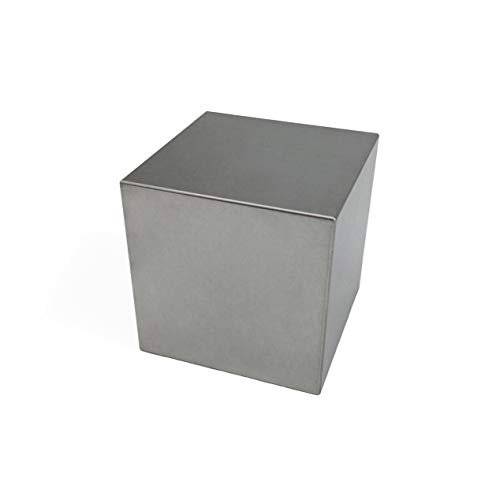
With a 2-inch edge length, this aerospace-grade tungsten alloy cube weighs a little over 5 pounds (2.36 kg). Its compact size makes it easy to handle while preserving a strong demonstration of density. This option is well-suited for demonstrations that require a balance between heft and manageability, and it serves as a robust conversation piece in STEM classrooms or science displays.
Tungsten Cube – 1 Inch

The 1-inch tungsten cube emphasizes high density in a compact form. This cube uses the same tungsten material common in aerospace and motorsports, with edges rounded for safe handling. Its small size makes it ideal for quick density demonstrations, precision mass comparisons, and teaching concepts of volume-to-mass relationships in a tightly controlled display.
Tungsten Cube – 0.5 Inch
This miniature 0.5-inch tungsten cube showcases the extraordinary density of tungsten in a highly portable form. It’s a popular option for quick classroom demonstrations, where a small, heavy object can illustrate density and mass without requiring large space. The cube remains a recognizable symbol of material science and engineering applications.
Tungsten Cube – 10mm Block

At 10 mm (0.39 inch), this ultra-dense tungsten block is designed for STEM education and collector purposes. Its 99.95% purity and right-angled edges support precise demonstrations of density, mass, and material properties. While small in size, its heft demonstrates tungsten’s density exceptionally well, making it a favored choice for compact labs and display cases.
Eight-Element Tungsten Cube Set – 1 Inch Each

This eight-piece set provides a broader context for density across elements. Each 1-inch cube corresponds to a different material, including tungsten, titanium, copper, iron, aluminum, zinc, magnesium, and carbon. The set is laser-etched with information such as atomic number, symbol, density, and melting point. It’s ideal for classroom displays, science fairs, and group demonstrations that compare densities across metals. The heft of each cube remains a focal point for discussions about material properties.
Buying Guide
When choosing a tungsten cube, consider size, density, handling safety, and intended use. Here are key purchase considerations:
- Purpose: For demonstrations, larger cubes (2.5″ and 2″) offer impressive heft for audience impact, while smaller cubes excel in compact labs and teaching aids.
- Material quality: Look for high-purity tungsten (generally around 99.95%) to ensure consistent density and accurate comparisons.
- Edge design: Rounded edges improve safe handling, especially in classroom environments or interactive displays.
- Units and weight: Be aware that larger cubes are significantly heavier; prepare appropriate storage and transport solutions to prevent injury.
- Educational value: Sets that include multiple elements or annotated surfaces can enhance STEM learning by enabling density comparisons and atomic-level discussions.
- Retention and display: For collectors, consider finishes, packaging, and the presence of laser-etched information to aid long-term value and readability.
- Budget and availability: Availability of multiple sizes from reputable suppliers helps tailor a collection to varied teaching or display needs.
In practice, educators often pair a few cube sizes to illustrate density differences clearly. For collectors, a mix of standard sizes and a few specialty sets can create a compelling physical narrative about density, purity, and material science history. Safety considerations, such as rounded edges and proper handling, remain essential across all sizes and configurations.