When repairing concrete walls, choosing the right patching product can dramatically improve durability and finish. This guide highlights top patching compounds and tapes suitable for concrete, masonry, drywall, plaster, stucco, and exterior surfaces. Each product is evaluated for adhesion, cure time, weather resistance, and ease of use so that homeowners, contractors, and DIY enthusiasts can select confidently.
Summary of chosen products:
- 3M High Strength Fiber Reinforced Spackling Compound (32 oz) – Large hole repair, interior or exterior.
- Flex Paste Waterproof Putty – Water and air barrier, UV resistant, dries underwater.
- Stepsaver Self-Adhesive Pre-Textured Patch – Steel reinforced, ready to paint.
- PC Products Two-Part Epoxy Paste – Crack filling and anchoring in concrete, moisture resistant.
- Abatron Abocrete Kit – Self-leveling cement epoxy for structural patching.
3M High Strength Fiber Reinforced Spackling Compound

This 32 oz spackling compound from 3M is designed for fast, strong repairs on holes and damaged surfaces across drywall, plaster, stucco, concrete, and wood. Its fiber reinforcement helps resist shrinkage and cracking, making it suitable for larger repairs (3 to 5 inches in diameter). It’s advertised for both interior and exterior use when sealed with exterior paint, which broadens its application on concrete walls exposed to the elements. Cure times and finish quality are improved by the fiber matrix, reducing the need for multiple passes on bigger patches.
Flex Paste Waterproof Putty And Sealant

Flex Paste is a paintable putty designed to fill gaps, cracks, and holes while creating a flexible, watertight barrier. This product is described as UV resistant and capable of working under water, which makes it attractive for concrete or masonry repairs in damp environments or submerged settings. A key feature is its stay-fresh container that minimizes waste and preserves sealing power. It forms a resilient layer that can be painted over, helping to blend repairs with surrounding surfaces while providing long-term protection against air and water intrusion.
Stepsaver Self-Adhesive Metal Patch With Pre-Textured Finish

This self-adhesive, pre-textured repair patch features a heavy-duty 24-gauge steel reinforcement with a flush fit and paint-ready surface. The pre-textured finish helps the patch align visually with surrounding textures, which is important for patches on concrete walls where appearance matters. The metal reinforcement provides structural support for larger repairs, and the self-adhesive backing simplifies installation without mixing or waiting for compounds to cure. It’s suitable for repairing penetrations, cracks, or damaged areas on concrete and other rigid substrates.
PC Products 72561 Two-Part Epoxy Paste
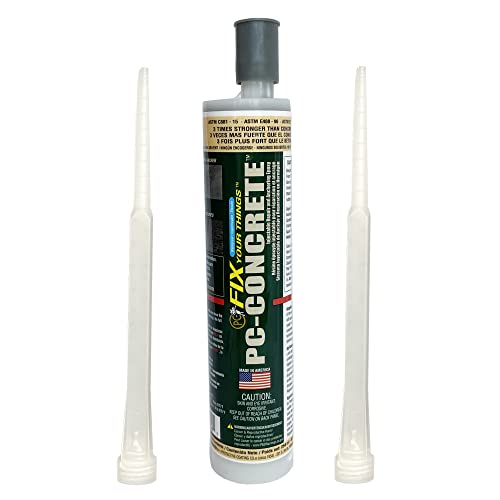
PC Products 72561 is a two-part epoxy paste designed for anchoring threaded rods, bolts, and dowels, as well as filling cracks in concrete. The paste adheres well in damp environments and is suitable for vertical applications, expanding its versatility for concrete wall repairs where moisture may be a concern. It’s appropriate for indoor and outdoor use across a broad temperature range, making it a practical choice for structural repair tasks that require a robust, moisture-resistant bond and long-term durability.
Abatron Abocrete Kit

The Abocrete Kit by Abatron is a self-leveling concrete epoxy patching system designed to rebuild and resurface concrete and other rigid substrates. It’s suitable for repairing pitted, spalled, worn, or cracked concrete and is noted for salt damage repairs. The kit combines structural patching with a leveling capability, making it useful for smoothing vertical or floor surfaces and restoring a uniform finish. It’s adaptable for both interior and exterior projects when used as directed, with strengths in long-term durability and resistance to environmental stressors.
Buying Guide: Concrete Wall Patching Essentials
Key considerations when selecting concrete patching products include substrate type, exposure conditions, and cure requirements. Below are essential perspectives to guide purchase decisions:
- Substrate compatibility: Concrete, masonry, stucco, drywall, and plaster each respond differently to patching compounds. For large holes on concrete walls, fiber-reinforced spackling or epoxy pastes offer robust adhesion and crack resistance.
- Moisture and weather exposure: Moisture-prone or exterior surfaces benefit from moisture-resistant formulations, underwater curing capabilities, and sealants that prevent water ingress.
- Structural vs. cosmetic repair: Structural patches require products with high strength, such as epoxy pastes or self-leveling repair mortars, while cosmetic fixes can use lighter fillers like spackling or taped patches for quicker results.
- Application conditions: Temperature ranges, humidity, and vertical vs. horizontal surfaces influence curing times and product selection. Some epoxies and cementitious patches perform best within defined temperature windows.
- Finish and paint readiness: If you plan to paint, choose patches that offer paint-ready textures or accept a skim coat for a seamless appearance. Textured patches can reduce the need for additional finishing work.
- Ease of use and downtime: Self-adhesive patches and pre-textured options save time, while two-part epoxies require mixing but offer strong, durable bonds in demanding conditions.
- Long-term durability: Consider products with moisture resistance, abrasion resistance, and compromised-edge repair options for high-traffic or exposed areas.
For best results, follow manufacturer mixing ratios, curing times, and surface preparation guidelines. When patching structural cracks or load-bearing sections, consult structural repair standards and, if necessary, a professional to ensure safety and compliance with local building codes.