Exploring solar powered ventilation solutions can dramatically reduce energy use while improving air circulation in attics, crawl spaces, sheds, and RVs. Below are five top-rated options that rely on sunlight to move air, minimize wiring, and withstand harsh conditions. Each product is selected for reliability, ease of installation, and strong performance in American homes and outbuildings.
| Product | Brand | Key Benefit | Approximate Use |
|---|---|---|---|
| Solar Attic Fan 32W 1600CFM | DC HOUSE | Off-grid operation, high airflow | Home attics, garages |
| Solar Exhaust Fan 8″ (25W) | SHENVITASO | Broad compatibility, quiet operation | Sheds, greenhouses, barns |
| CanadaGoGreen 10W Vent | CanadaGoGreen | Quiet cooling for up to 500 sq ft | Attics, small spaces |
| RecPro RV Solar Ventilation Fan | RecPro | RV/marine ready, simple install | RVs, campers |
| Solar Powered Exhaust Vent For Shipping Containers | Generic | High CFM, leak-resistant sidewall install | Shipping containers, outbuildings |
Solar Attic Fan 32W 1600CFM By DC House
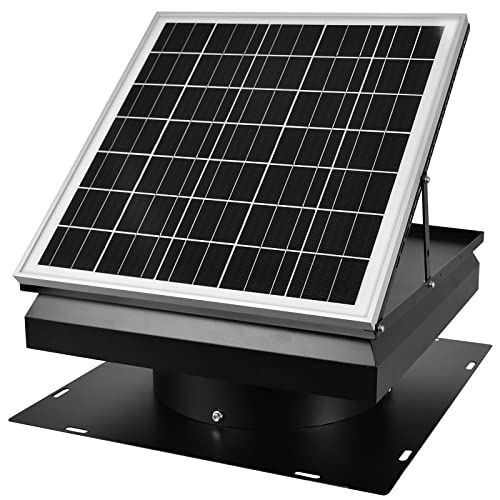
DC HOUSE delivers a 32W solar panel-driven attic fan with up to 1600 CFM airflow. It operates off-grid, requiring no wiring or electrical connection, and automatically activates at sunrise and powers down at dusk. The system aims to reduce attic temperatures by up to 30°F and can help lower AC demands. The design uses aerodynamically optimized blades rated to withstand winds up to 130 mph and temperatures from -40°F to 150°F, making it suitable for home attics, garages, and workshops. Pro users often pair it with existing vents to boost overall airflow in larger spaces.
Solar Exhaust Fan 25W With 8-Inch Fan

SHENVITASO pairs a 25W solar panel with an 8″ fan to produce up to 430 CFM. The system features a 16.4-foot cord and a power adapter option, allowing placement on roofs or shaded areas while maintaining operation on cloudy days, day or night. An anti-backflow valve prevents unwanted intrusion when the fan is off. Its configuration suits small to medium spaces such as sheds, greenhouses, chicken coops, and garages, with relatively quiet operation (around 36 dB).
CanadaGoGreen 400 CFM Solar Powered Vent

This 10W monocrystalline solar vent is designed for sloped roofs and provides up to 400 CFM cooling across spaces up to 500 sq ft. It operates from dawn to dusk and continues passive ventilation after sunset. The vent is built to be water-tight and animal-proof, with a focus on quiet operation and durability in extreme weather. It’s positioned as a robust, low-maintenance option for attics, garages, and other larger crawl spaces that require steady airflow.
RecPro RV Solar Ventilation Fan
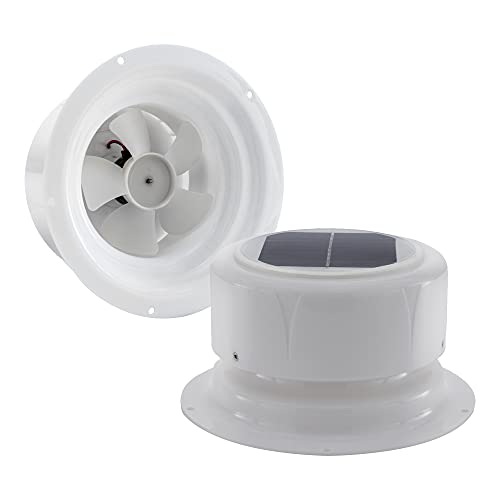
RecPro offers a solar-powered ceiling vent designed for RVs, campers, and sheds. The built-in solar panel powers the fan automatically to remove odors and moisture from holding tanks without complex wiring or batteries. The system emphasizes quiet, reliable operation and straightforward installation to fit most RV plumbing caps. It provides a practical solution for mobile living spaces where wiring access is limited.
Solar Powered Exhaust Vent For Shipping Containers

This vent is designed for sidewall installation on shipping containers, focusing on high airflow with leak-resistant performance. It’s positioned as a rugged option for industrial or storage applications where roof mounting isn’t feasible. The emphasis is on durable construction and reliable airflow to reduce heat buildup and improve ventilation in harsh outdoor settings.
Buying Guide: Key Considerations For Solar Powered Foundation Vents
- Ventilation Needs: Assess the square footage to determine CFM requirements. Larger spaces benefit from higher airflow units, but airflow should be balanced with noise considerations and structural compatibility.
- Solar Panel Quality: Look for monocrystalline panels for higher efficiency and better performance in low-light conditions. Consider the panel’s durability and weather protection ratings for your climate.
- Control and Automation: Some vents automatically activate at sunrise and deactivate at dusk. Others offer adapters or manual overrides. Consider whether you need nighttime operation or weather-based triggers.
- Installation And Fit: Ensure the vent opening matches standard crawl space or foundation openings (commonly 8×16 inches). Check mounting hardware, weather sealing, and potential need for spacers or trim.
- Durability And Weather Resistance: Foundations and attics endure extreme temperatures, moisture, and pests. Look for corrosion-resistant parts, UV-resistant housings, and secure animal barriers.
- Noise Level: For living spaces near vents, consider the decibel rating. Larger fans can move more air but may produce more noticeable sound; choose models designed for quiet operation when possible.
- Energy Independence: Solar-only operation reduces electricity costs, but some units offer adapters to connect to an external power source if needed during long overcast periods.
- Maintenance: Check for easy cleaning access, replaceable filters if applicable, and long-term warranties that cover weather-related wear and tear.
- Application Versatility: Some units are optimized for attics, others for crawl spaces, sheds, or RVs. Match the product’s intended use to your project for best results.
- Integrations With Existing Vent Systems: If you’re upgrading a crawl space or attic, consider how the new solar vent complements existing passive vents or exhaust paths to optimize airflow.