Uneven floors can compromise a wide range of flooring installations, from tile to hardwood. Self-leveling underlayments create a smooth, stable base that improves adhesion, reduces trip hazards, and speeds up project timelines. This guide highlights five widely available products designed to level concrete, plywood, and other subfloors, with a focus on reliability, durability, and ease of use for American DIYers and pros alike.
| Product | Brand | Key Benefit | Substrate |
|---|---|---|---|
| Herny® 12167 Floorpro Self-leveling Underlayment | Henry | Heavy-duty cement-based underlayment | Interior concrete |
| ARDEX TL 2000 Fiber Reinforced | ARDEX | Durable, fiber-reinforced for higher tensile strength | Concrete, wood, tile |
| Ardex V 1200 Self-Leveling Underlayment | Ardex | Excellent flow and healing for easy leveling | Interior concrete, terrazzo, ceramic |
| ARDEX K 15 Premium Self-Leveling Underlayment | Ardex | Fast-setting, versatile for many substrates | Interior concrete |
| ARDEX K 301 Exterior Self-Leveling Topping | Ardex | Exterior-ready leveling topping for fast resurfacing | Exterior concrete |
Whether you’re renovating a basement floor, preparing a substrate for tile, or finishing a high-traffic area, the products listed below are representative options that perform well in typical American homes and commercial spaces. Each section provides essential details to help you compare performance, compatibility, and installation considerations.
Herny® 12167 Floorpro Self-Leveling Underlayment

Product Type: Self-leveling Underlayment. Quantity: 1 bag. Manufacturer: ARDEX LP. This cement-based underlayment is designed to create a smooth, level base on interior concrete substrates. It is suitable for applications requiring quick leveling with a robust base for subsequent floor coverings. Consider this option when you need a dependable leveling compound compatible with a variety of finish flooring types.
Sika Sikalevel Self-Leveling Underlayment Primer

Primer for self-leveling systems, ready to use with no dilution. It is designed to prime concrete and cement screeds, ensuring a strong bond between the underlayment and substrate. While not a leveling compound itself, proper priming is a critical step that helps prevent bond failures and reduce moisture-related issues in concrete floors.
Custom BLDG 21018 Floor-Leveling Compounds
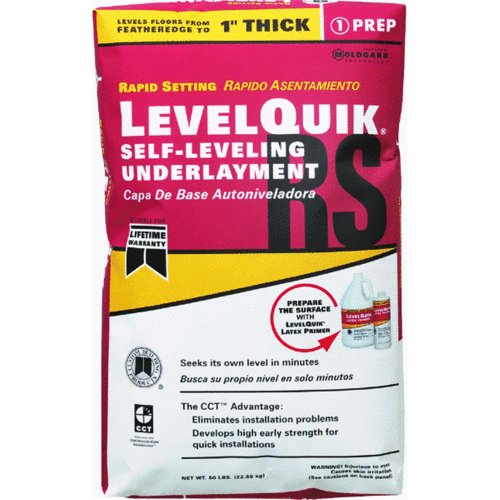
Product line representing storage and packaging of leveling compounds. Provides a practical option for projects requiring a ready mix or bulk packaging for large installations. Consider this option when sourcing a general-purpose leveling compound with straightforward handling for interior leveling tasks.
ARDEX TL 2000 Fiber Reinforced

Fiber-reinforced self-leveling floor underlayment with cement-based polymer modification for interior concrete, wood, tile, and radiant heat systems. It offers increased durability, tensile strength, and flexural performance, making it a strong choice for high-traffic areas or installations that demand long-term stability. It smooths uneven substrates and provides a solid base for various floor coverings.
Ardex V 1200 Self-Leveling Underlayment

Interior self-leveling underlayment designed for concrete, terrazzo, ceramic, and quarry tile substrates. It features excellent flow and healing properties that enable a smooth, level surface with minimal effort. Suitable for residential and commercial projects, it helps produce a uniform base for tile or other coverings and is compatible with radiant heat systems.
ARDEX K 301 Exterior Self-Leveling Topping

Exterior self-leveling topping designed for fast resurfacing of exterior or interior concrete. It blends Portland and other hydraulic cements for high early strength and durability. It can be installed from 1/4″ to 3/4″ neat and up to 2″ with aggregate, making it versatile for exterior leveling projects and transitions where moisture exposure is a concern.
Buying Guide: Key Considerations For Self-Leveling Floors
- Substrate compatibility: Confirm whether the product is intended for interior concrete, plywood, tile, or mix substrates. Some formulas are reinforced for higher durability, while others are optimized for rapid setting on specific materials.
- Flow and skim properties: Higher flow typically yields a smoother result with fewer manual passes. Look for products with good flow characteristics and self-healing capabilities to minimize air pockets and pinholes.
- Set time and floor readiness: Consider worksite schedule and desired flooring installation windows. Fast-setting options enable quicker transitions to finished flooring but may require precise timing and conditions.
- Bonding and primers: Primers can significantly improve adhesion and reduce moisture migration. Ensure the primer is compatible with the chosen leveling compound and substrate.
- Durability and load considerations: For high-traffic areas or commercial spaces, fiber-reinforced or polymer-modified formulations offer superior tensile strength and long-term performance.
- Exterior vs interior use: Exterior-grade products address moisture exposure and freeze-thaw cycles, often with different mix ratios or curing requirements than interior formulas.
- Finish flooring compatibility: Verify which floor coverings you plan to install (tile, vinyl, hardwood, carpet) and confirm compatibility with the leveling compound’s setting time and substrate preparation.
- Temperature and humidity: Follow manufacturer guidelines for ambient conditions during mixing and installation to avoid cracks or delayed cure times.
Selecting the right self-leveling compound hinges on substrate type, desired curing time, and final flooring plan. For American homeowners and professionals, durable, fiber-reinforced options or fast-setting blends provide reliable results across residential basements, kitchens, and commercial spaces. Pair any leveling compound with a suitable primer when required to maximize bond strength and long-term performance.