Keeping an eye on your garage door from anywhere adds peace of mind and helps prevent unauthorized access. This guide highlights five top universal garage door monitor options that work with most openers, integrate with popular smart home ecosystems, and provide real-time alerts. Each product below is evaluated for compatibility, installation ease, and how it enhances security without requiring a hub. Use the buying guide at the end to compare features such as wireless setup, alert types, and multi-device support to pick the right monitor for your home.
Summary of chosen products:
| Product | Brand | Key Benefit |
|---|---|---|
| eKyro Smart Garage Door Opener | eKyro | |
| Garage Door Minder Version II | Garage Door Minder | |
| meross MSG100HK | meross | |
| Brocel GarageDoorBuddy Monitor | Brocel | |
| Liftmaster 915LM | liftmaster |
eKyro Smart Garage Door Opener
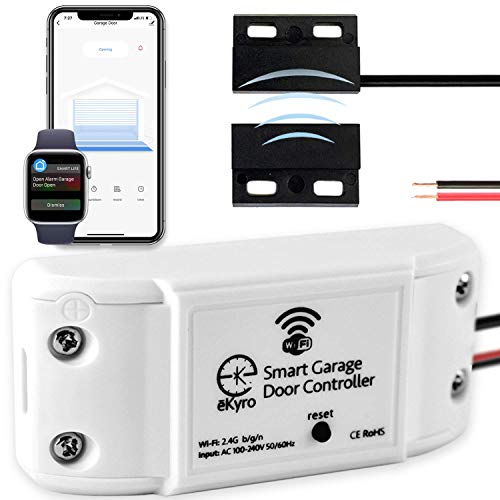
eKyro offers a universal adapter that connects to existing openers and then links to WiFi for monitoring and control from mobiles and voice assistants. It supports Alexa, Google Home, Siri, and Android devices, enabling hands-free operation and real-time alerts if the door is left open. The system emphasizes broad compatibility, with an adapter option for openers that aren’t natively compatible. This model is designed to work with many brands, though some limitations apply to certain motors (notable exclusions are mentioned by the manufacturer).
Garage Door Minder Version II

The Garage Door Minder Version II is a 100% wireless monitoring system that does not require Wi-Fi. It focuses on in-home alerts with whole-house notification beeps and customizable volume. This model does not operate the door remotely; it only monitors status and sends alerts through paired transmitters and receivers. It’s quick to install—approximately two minutes—and is ideal for users seeking a simple, no-network solution that still enhances awareness of door status throughout the home.
meross Smart Garage Door Opener Remote
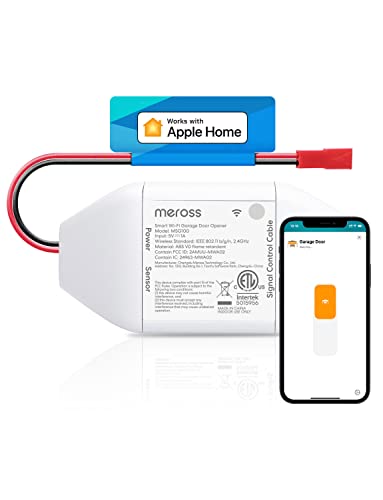
The meross MSG100HK turns an existing garage door opener into a smart device without requiring a dedicated hub. It supports Apple HomeKit, Siri, CarPlay, Alexa, Google Assistant, and SmartThings, allowing remote control, status checks, and notifications through a compatible app. The device emphasizes broad platform compatibility and reliable remote operation, making it a strong choice for users seeking integrated voice and app control across multiple ecosystems.
Brocel GarageDoorBuddy Monitor

The Brocel GarageDoorBuddy Monitor focuses on remote status visibility via iOS and Android apps. It supports 2.4G WiFi and dual-band 2.4G/5G networks, but it cannot operate the door itself. It’s intended for ongoing status updates rather than door control, and the dual-band support helps ensure compatibility with modern home networks while keeping setup straightforward for users who want easy accessibility to door status anywhere in the home.
Liftmaster 915LM

LiftMaster 915LM is a wireless garage door monitor designed for compatibility with certain MyQ-enabled openers. It provides door status alerts and is positioned as a reliable option within a networked ecosystem. This monitor focuses on clarity of status information—open or closed—and offers practical notification features to improve home security and convenience for users already invested in LiftMaster/MyQ products.
Buying Guide
- Compatibility: Confirm your opener’s brand and learn button color compatibility for universal adapters or wireless monitors. Some kits require adapters for older or non-standard units.
- Connectivity: Decide between Wi-Fi dependent devices and those that work without internet. Wi-Fi models offer remote access, while non-Wi-Fi options can be simpler and more private.
- Control vs. Monitoring: If you want to control openings remotely, choose devices that support two-way control in addition to status alerts. For monitoring only, a sensor-based model may suffice.
- Smart Home Integration: Check compatibility with your preferred ecosystems (Alexa, Google Assistant, Apple HomeKit, SmartThings). Some devices require no hub, while others rely on your existing smart home hub.
- Alerts and Notifications: Consider alert frequency, customization, and multi-device alerts. Wireless monitors with voice prompts or in-home beepers can add redundancy for security.
- Installation: Look for simple “peel and stick” setups or minimal wiring. Some devices may require adapters for certain garage door openers.
- Privacy and Security: Evaluate data handling, local vs cloud processing, and any subscription requirements. Models without a mandatory subscription reduce ongoing costs.
- Reliability: Review the option’s history with false alarms or connectivity dropouts. Devices with robust wireless performance tend to deliver fewer disruptions.