Finding a reliable single-appliance water softener helps protect plumbing, extend appliance life, and improve everyday water quality. This guide highlights five highly capable units designed for whole-house use, focusing on capacity, efficiency, and ease of maintenance. Each product is evaluated for typical American homes seeking softer water without constant manual intervention.
| Product | Brand | Capacity (Grains) | Type |
|---|---|---|---|
| Aquasure Harmony Series 48,000 | Aquasure | 48,000 | Whole-house, metered |
| AO Smith Descaler | AO Smith | Salt-free | Descaler, scale prevention |
| Kenmore 350 Softener | Kenmore | 32,000 | Whole-house, salt-saving |
| Aquasure Harmony Series 32,000 | Aquasure | 32,000 | Whole-house, metered |
| GE Smart Water Softener, 35,000 | GE | 35,000 | Whole-house, WiFi |
Below are five products selected for their balance of capacity, efficiency, and consumer-friendly features. Each entry includes a direct link to the product page, a visual, and key functionalities to help you compare at a glance.
Aquasure Harmony Series 48,000 Grains

The Harmony Series 48,000-Grain softener is designed for households typically with 3–4 bathrooms. It provides ultra-softened water to every outlet, helping to reduce scale buildup and extend appliance life. The unit is noted for high efficiency in treating hardness and includes a triple-purpose pre-filter element (sediment, carbon, and zinc). This combination aims to remove common contaminants such as chlorine and odors while delivering consistent soft water. The system supports whole-home performance, protecting plumbing and appliances from mineral-related wear.
AO Smith Descaler System

The AO Smith Descaler is a salt-free water treatment option that focuses on scale prevention rather than softening minerals. It is suitable for moderate hardness and is designed to require no backwashing, salt bags, or electricity. While it does not remove minerals to soften water, it reduces scale buildup in pipes and appliances, and supports a broad range of incoming water conditions. This approach can be appealing for households seeking a low-maintenance alternative with minimal ongoing costs.
Kenmore 350 Water Softener

The Kenmore 350 is a compact, whole-house softener designed for 1–4 person homes. It reduces hard minerals such as calcium, magnesium, and iron to prevent scale, helping with softer hair, brighter laundry, and cleaner dishes. The IntelliSoft technology learns household water use patterns to optimize regeneration, conserving salt and reducing waste. This model emphasizes ease of installation and ongoing efficiency, balancing performance with practical maintenance needs for smaller households.
Aquasure Harmony Series 32,000 Grains
The Harmony Series 32,000-Grain unit targets smaller households, typically 1–2 bathrooms. It offers reliable removal of hardness minerals, protecting plumbing and appliances while reducing scale buildup. The 32k model is designed for steady performance across the entire home, helping to deliver consistently softer water for showering, laundry, and dishware. Its automatic metered control contributes to efficient salt use and scheduling for regenerations, minimizing waste while maintaining comfort in daily water use.
GE Smart Water Softener, 35,000 Grain
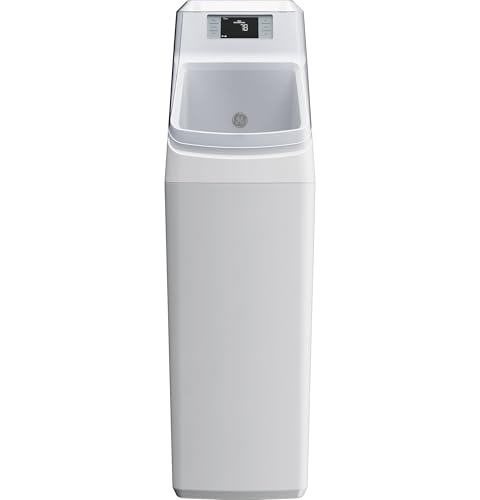
GE’s 35,000-Grain Smart Water Softener combines solid capacity with modern connectivity. It offers built-in WiFi and water flow alerts via a mobile app, enabling remote monitoring and control. The unit is designed for households up to about six people and provides traditional softening benefits—reducing soap scum, protecting plumbing, and extending appliance lifespans. Optional remote shutoff capability enhances safety, particularly for leak detection, while keeping daily operation straightforward for homeowners who want smart features alongside reliable performance.
Buying Guide: Key Purchase Considerations
- Household size and water hardness: Match capacity (grains) to your home’s hardness level and number of occupants. Larger homes with higher hardness require higher-capacity models to avoid frequent regenerations.
- Salt vs. salt-free approaches: Salt-based systems soften water by removing minerals, while salt-free descalers prevent scale without lowering mineral content. Consider maintenance costs, environmental impact, and taste preferences when choosing between the two.
- Metered vs. timer control: Metered systems regenerate based on actual water usage, improving efficiency. Timer-based models predict usage but may waste salt if consumption is low.
- Installed space and ease of installation: Compact models suit smaller utility areas. Look for models with clear installation instructions, included fittings, and customer support options.
- Smart features and monitoring: WiFi connectivity, mobile apps, and remote shutoff capabilities add convenience and peace of mind, especially for larger homes or multi-story setups.
- Maintenance and replacement parts: Consider resin bed longevity, filter pre-cleaners, and availability of replacement parts or salt. A robust maintenance plan helps sustain performance over time.
- Water quality considerations: If your water has high iron, sulfur, or odor, prioritize models with pre-filters or advanced media beds designed to address these contaminants.
- Installation compatibility: Some systems are better suited to city water, while others are versatile for well water or mixed sources. Check local water conditions and any municipal requirements.
Selecting the right single-appliance water softener involves balancing capacity, maintenance, and cost implications with your home’s water profile. The options above span traditional salt-based softening, salt-free descaling, and smart-enabled systems, providing a spectrum of strategies to achieve consistently softer water across your household.