Rubber quarter round trim offers flexible, durable solutions for sealing gaps and finishing edges around floors, walls, and fixtures. This article highlights five top picks and explains how silicone and rubber profiles can resist moisture, heat, and wear. Whether you’re updating a bathroom, kitchen, or staircase, these options provide self-adhesive ease, clean lines, and long-lasting performance. Explore the features, usage ideas, and buying guidance to choose the right trim for your project.
Summary of Chosen Products
- Cuysfead 9.8′ Flexible Quarter Round Molding — White — Peel and stick, silicone rubber
- Conwang Flexible Quarter Round Molding — 118″ L — Self-adhesive, bendable edge trim
- ESUFEIR Flexible Quarter Round Molding — 118″ — U-shaped silicone, anti-bulge design
- Risunpet 3/4 Inch Flexible Quarter Round Molding — 118″ — Rubber trim, self-adhesive
- MYFAMIREA Flexible Quarter Round Molding — 120 Inch — White — Self-adhesive, bendable
Cuysfead 9.8′ Flexible Quarter Round Molding
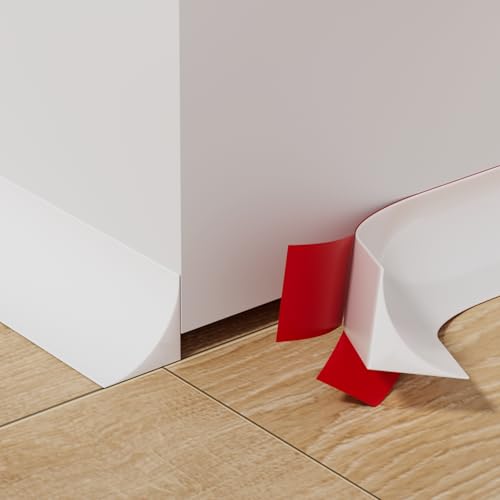
Specification notes that this quarter round molding is 0.6″ wide by 0.6″ high with two bottom edges at a 90-degree angle. It fits around inside edges to deliver a seamless, clean look. The design supports multiple applications, including gaps around floors, stairs, window sills, baseboards, and counter or tub areas. Made from high-quality silicone, it is stable, bendable, and resistant to water, heat, and corrosion. This makes it suitable for damp areas such as bathrooms and kitchens while remaining easy to install with its self-adhesive backing.
Industrial and home remodeling projects can benefit from its flexibility. The self-adhesive feature reduces the need for nails or tools, enabling quick alignment along curved or irregular edges. Careful surface preparation—clean, dry, and smooth—helps ensure adhesion. The white color provides a neutral finish that blends well with most decors, and the silicone construction helps it maintain shape even after exposure to moisture or temperature changes.
Conwang Flexible Quarter Round Molding

This molding measures 118 inches long, with a width and height of 0.6 inches. It features a winged, porous interior to improve softness and flexibility for curved stairs, columns, and walls. The self-adhesive edge trim adheres to most smooth surfaces, making it suitable for floors, walls, cabinets, countertops, baseboards, and bathtubs. A key advantage is its ability to conform to rounded corners, delivering a neat finish where traditional round profiles may bulge. Clean surfaces before application and press firmly to secure the bond.
The product is designed for versatile DIY use and can be cut to length as needed. The packaging and design emphasize user-friendly installation without specialized tools. It’s well-suited for projects that require a flexible border around curved or irregular edges, where a rigid trim might not fit properly. Proper prep and gentle handling help maintain its appearance over time, particularly in high-traffic or humid areas.
ESUFEIR Flexible Quarter Round Molding

The ESUFEIR option features a crown molding profile with a 9/16 inch width and height, designed to seal gaps and block dust and moisture. Its U-shaped, concave design helps it fit into right-angled areas such as window sills, bathtub perimeters, baseboard edges, countertops, and stairs. The silicone material is elastic, resistant to moisture, and easy to clean, making it a practical choice for bathrooms and kitchens. Its flexible nature supports a smooth transition between surfaces, reducing the risk of bulging or gaps that can collect dirt or moisture.
Key advantages include durable silicone performance and a hydrophobic, stain-resistant surface. The trim is easy to cut and apply, and its flexibility helps it adapt to irregular surfaces. This makes it a strong option for homeowners seeking a sleek look with long-term maintenance ease, especially in moisture-prone zones where vinyl or PVC alternatives might degrade over time.
Risunpet 3/4 Inch Flexible Quarter Round Molding

This 3/4 inch wide and high quarter round molding uses flexible rubber material designed for stability, softness, and water resistance. It is suited for gaps between doors, windowsills, stoves, countertops, bathtubs, and walls. The self-adhesive backing allows for easy installation on smooth surfaces, and the molding can be cut to length with a utility knife as needed. Its flexibility makes it a good choice for curved edges around bathtubs, sinks, or stair bases, where a rigid trim would struggle to fit tightly.
Durability and resistance to heat, moisture, and corrosion are highlighted in the product description. The trim’s ability to conform to irregular shapes helps achieve a clean finish on complex layouts. While it is designed for indoor use, it can be a practical option for kitchens and bathrooms where frequent cleaning is needed and gaps can trap moisture or dust if not properly sealed.
MYFAMIREA Flexible Quarter Round Molding

The MYFAMIREA trim offers 120 inches of white, self-adhesive, bendable edge trim for wall edges, corners, countertops, bathrooms, kitchens, and floors. It is designed to resist moisture and heat, with a strong adhesive backing that remains secure on smooth surfaces. The product emphasizes long-term color stability, resisting yellowing and deformation. Its bendable design allows for seamless transitions around curved edges, making it suitable for projects where a traditional rigid trim would be impractical.
Installing this trim involves cleaning the surface, peeling the backing, and pressing the molding into place. Its white color ensures compatibility with a variety of decors, from modern minimalism to traditional kitchens. The long length helps minimize seams in larger rooms, while the flexible material provides a forgiving fit around irregularities, reducing the risk of air gaps and moisture intrusion.
Buying Guide: Key Purchase Considerations
- Material and durability: Silicone and rubber trims offer moisture resistance and flexibility. Consider the environment (bathroom, kitchen, or hallway) to choose a material that resists humidity, heat, and cleaning chemicals.
- Adhesive backing: Self-adhesive trims simplify installation, especially on smooth surfaces. For rough or dusty surfaces, prepare by cleaning and drying the area or consider alternative attachment methods.
- Length and coverage: Longer rolls minimize seams. Check total length (e.g., 118″ vs. 120″) and plan for corners or irregular spaces to avoid gaps.
- Profile and fit: Quarter round profiles with inner right angles are best for precise inside corners. Flexible designs help around curved stairs, tubs, and cabinets without bulging.
- Color and finish: White trims blend with most decors. If you have a specific color scheme, confirm the shade to avoid noticeable contrast.
- Installation considerations: For DIY projects, look for simple alignment, gentle bending, and scratch-free surfaces. Avoid over-stretching to prevent tearing at glue lines.
- Maintenance: Choose materials that are easy to wipe clean and resist staining. Hydrophobic and corrosion-resistant surfaces simplify upkeep in kitchens and baths.
- Versatility: Evaluate whether the trim supports multiple applications (floor edges, wall corners, cabinet edges, and window sills) to maximize value across rooms.
- Safety: Rounded edges reduce the risk of injuries for households with children or pets. Where possible, avoid sharp corners near high-traffic zones.