When managing indoor air quality, selecting the right exhaust fans is essential for removing heat, moisture, and odors. This guide highlights five reliable options that balance power, noise, and efficiency for spaces like grow tents, workshops, bathrooms, and kitchens. Each product is evaluated on airflow, noise, safety features, and installability to help you choose the best fit for your needs.
| Product | Airflow (CFM) | Noise | Best For | Notes |
|---|---|---|---|---|
| VIVOSUN D4 4″ Inline Duct Fan | 195 | Low (≈30 dB) | Grow tents, basements, attics | ETL motor, flame-retardant junction box |
| POLISI3D 3″ Duct Fan | 200 m³/h | Low (≈30 dB) | 3D printers, laser engraving, general ventilation | Speed controller included |
| Broan-NuTone Bathroom Exhaust Fan | 50 | 2.0 Sones | Small bathrooms and powder rooms | Energy Star certified |
| 5in Air Exhaust Fan, 210CFM | 210 | Moderate | 3D printers, grow tents, DIY projects | DC12V with dimmer control |
| 4in Exhaust Fan with Check Valve | 117 CFM | Low | Home, kitchen, garage ventilation | Metal housing, check valve |
VIVOSUN D4 4 Inch Inline Duct Fan
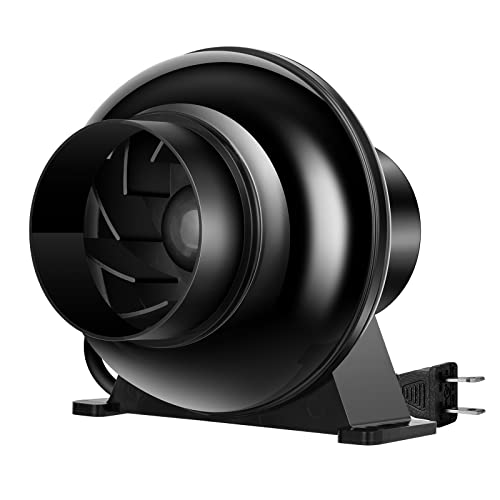
The VIVOSUN D4 inline duct fan is designed for compact yet efficient airflow across grow tents, attics, basements, and kitchen exhausts. At 195 CFM and a 2500 RPM motor, it delivers robust ventilation to transfer heat, regulate humidity, and maintain air quality in enclosed spaces. A built-in flow deflector minimizes turbulence, contributing to a quiet operation around 30 dB. The motor is ETL listed, and the unit includes a flame-retardant junction box for added safety. This combination makes it suitable for continuous use in moderate-duty exhaust applications without causing excessive noise or energy waste.
Key considerations include its 4-inch duct compatibility and the balance between airflow and noise. The D4 is best used where steady airflow is required over a moderate distance, such as circulating air in a grow tent or drawing stale air from a small workspace. For installers, the unit’s safety features—ETL listing and automatic reset—offer peace of mind in areas with heat and dust. If your project involves longer runs or higher heat, you may want to pair it with appropriate ducting and vibration isolation to maximize efficiency and minimize noise transfer.
POLISI3D Powerful 3-Inch Duct Fan
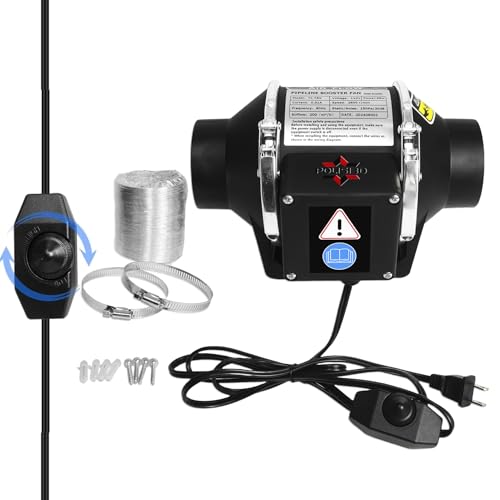
The POLISI3D 3-inch duct fan is tailored for compact yet effective ventilation tasks. With a copper motor delivering 200 cubic meters per hour of airflow, it excels at quickly removing smoke, fumes, and odors in enclosed workspaces such as 3D printer enclosures and small grow tents. A speed controller enables on-the-fly adjustment to suit different tasks, while a low noise level of around 30 dB keeps distractions to a minimum. The unit’s versatility makes it a solid choice for users who need steady airflow in tight spaces without sacrificing quiet operation.
Practical considerations include the balance between size, airflow, and noise. The adjustable speed helps you tailor performance for delicate materials or volatile chemicals, and the 3-inch form factor makes it easy to install in existing enclosures without extensive ductwork. As with any duct fan, ensuring proper mounting and vibration isolation will help maximize lifespan and keep the sound profile consistent across different operating conditions.
Broan-Nutone Bathroom Exhaust Fan

The Broan-NuTone bathroom exhaust fan delivers 50 CFM, a sensible choice for smaller bathrooms or powder rooms up to about 45 square feet. Energy Star certified, it runs at around 2.0 sones, offering effective moisture and odor control with relatively low noise. The unit is designed for straightforward installation with a compact housing and foldable mounting brackets, allowing versatile placement without requiring attic access. Duct sizing is simple with a 3-inch diameter option, and the overall footprint supports quick upgrades in confined spaces.
In a testing scenario, a 50 CFM model can efficiently remove humidity after showers and odor sources in small rooms. The trade-off is that larger bathrooms or spaces with higher moisture loads may need higher-capacity fans. Installation ease makes this option attractive for renters or DIY remodels, where minimizing wall or ceiling modifications is desirable. To optimize performance, consider pairing with an appropriate vent duct and sealing to prevent air leaks.
5in Air Exhaust Fan With 210CFM

This 5-inch exhaust fan delivers up to 210 CFM with a dual-ball bearing DC12V motor, making it a strong choice for 3D printer enclosures, large grow tents, or DIY projects requiring substantial airflow. The unit features a 120mm square face and a 4.8 by 4.8-inch body, with a rear duct connector for 5-inch piping. The PWM/dimmer speed controller allows precise adjustment from off to full speed, so you can balance venting needs with noise considerations. Its higher airflow makes it suitable for moderately demanding ventilation tasks, especially when paired with silencing measures like duct dampers or absorbers.
Performance depends on quietness versus airflow: higher CFM typically equates to more noise, so users should plan for acoustic treatment if noise is a concern. The dual-ball bearing design improves longevity under continuous operation. When integrating into a system, ensure compatible ducting and proper sealing to prevent backdrafts and heat buildup in adjacent spaces.
4in Exhaust Fan With Check Valve

The 4-inch exhaust fan from Hose Vary is built with a metal housing and includes a check valve, which helps prevent backflow when the fan is off. Delivering approximately 117 CFM, this unit is well-suited for kitchen ventilation, home offices, garages, or small workshops where preventing recirculation of odors is important. The fan uses a 110V motor and a compact 4-inch duct connection, simplifying installation in wall or ceiling cavities. The metal construction supports durability in damp or dusty environments, while the check valve adds a layer of control over unwanted air ingress.
Key trade-offs include airflow capacity versus noise and energy use. At 117 CFM, the unit provides sufficient exhaust for many small spaces, but larger rooms may require multiple fans or higher-capacity units. For best results, ensure proper sealing around the duct entry and consider mounting an inline damper to minimize backdraft when the fan is off.
Buying Guide: Key Purchase Considerations
- Airflow needs: Match CFM or equivalent airflow ratings to the size of the space and the target task (bathroom humidity, grow tent heat, or workshop fumes). Higher airflow can reduce buildup but may increase noise and energy use.
- Noise and comfort: Look for low decibel ratings or models with speed control to tailor performance to the environment. For bedrooms or quiet offices, prioritizing sound reduction is essential.
- Energy efficiency: Energy Star certifications and DC motors typically offer better efficiency and reliability for continuous use. Consider long-term operating costs as well as upfront price.
- Durability and safety: ETL listings, metal housings, and flame-retardant components improve safety. Check for backflow prevention features like check valves when odor control is important.
- Installation compatibility: Confirm duct size (4″, 5″, etc.), mounting space, and whether attic access or wall penetration is required. Some models feature easy installations with minimal tools.
- Control and adjustability: Speed controllers or PWM dimmers allow precise airflow management, balancing performance with noise and energy usage for different tasks.
- Use case variety: For smaller bathrooms, a 50 CFM unit may suffice; for grow tents or workshops, higher airflow (100–210 CFM or more) may be necessary to maintain temperature and ventilation.

When selecting an exhaust fan, consider the space’s ventilation goals, noise tolerance, and installation constraints. A system with the right balance of airflow and acoustic performance will maintain comfortable indoor air quality while supporting energy efficiency. Compare the five models above for your specific needs—whether circulating air in a grow tent, venting a bathroom, or removing fumes in a workshop—and choose a unit with robust safety features and flexible control options to ensure reliable operation over time.